Why the sun is setting on the Boeing 747

By Guy Gratton, The Conversation
Updated 2335 GMT (0735 HKT) February 1, 2016
12 photos: Boeing through the ages
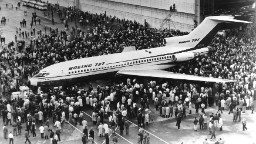
Boeing 727 – Boeing struck gold with the 727. Just 250 were planned, but demand was so high that 1,832 were built by the time production ceased in 1984. The most distinctive of Boeing's early jets, with a T-shaped tail and a trio of rear-mounted engines, the noisy 727 took its first flight in 1963. It was designed to use smaller, less developed runways, making it amenable to a host of out of the way airports.
Hide Caption
7 of 12
12 photos: Boeing through the ages
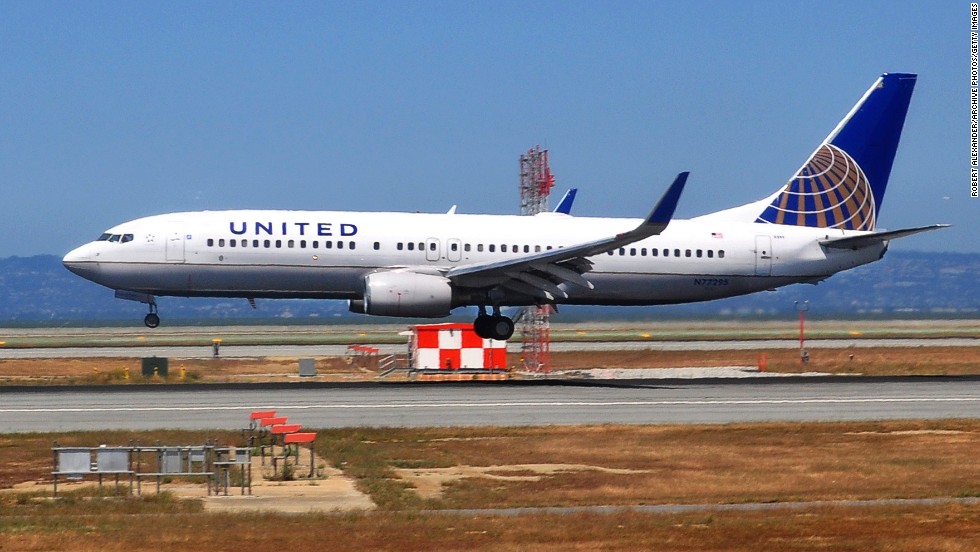
Boeing 737 – Chances are you've flown on a 737, which has been around since 1967. The best-selling jet in aviation history offered six-abreast seating, allowing more passengers per flight. The number of seats was increased by moving the engines under the wing. Flight engineers were made redundant by the 737's technology and a two-crew cockpit became standard.
Hide Caption
8 of 12

12 photos: Boeing through the ages
Boeing 777 – Upon hitting the skies in 1994, the 777 became the widest, most spacious jetliner in its class. Carriers have increasingly used the 777 as a fuel-efficient alternative to other wide-body jets, particularly for long-haul flights.
Hide Caption
9 of 12
12 photos: Boeing through the ages
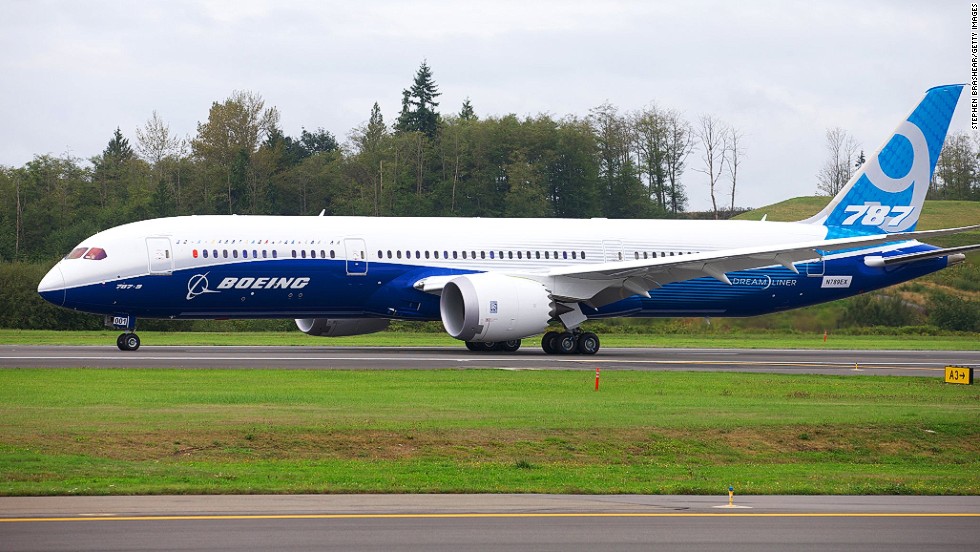
Boeing 787 Dreamliner – The Dreamliner is said to have revolutionized jetliner design and brought commercial aeronautics into the 21st century. Its "plastic" fuselage makes it lighter and 20% more fuel-efficient than similar-sized aircraft, while it claims to enhance the passenger experience with bigger windows and more space.
Hide Caption
10 of 12

12 photos: Boeing through the ages
Boeing 777X – Boeing officially launched its 777X program in 2013 at the Dubai Air Show. The 9X version will have a range of over 14,075 kilometers (8,746 miles) and fit 400 passengers. Notable changes from the original 777 include a longer, composite wing and a new GE engine. Production is scheduled to begin in 2017 and first delivery is targeted for 2020.
Hide Caption
11 of 12

12 photos: Boeing through the ages
737 MAX – The Boeing 737 MAX made its debut flight on January 30, 2016. The fourth generation of this family of aircraft is designed to compete directly against the Airbus A320neo family aircraft in an ongoing battle to dominate the global narrow-body market segment.
Hide Caption
12 of 12

12 photos: Boeing through the ages
Best of Boeing – The Boeing 747 was one of the iconic commercial jets of the 20th century. Its arrival in the late 1960s came about largely because Pan Am thought bigger planes would be the answer to passenger congestion at airports.
Hide Caption
1 of 12

12 photos: Boeing through the ages
Boeing 80 – Built in 1928, the Model 80 was America's first airliner designed to transport passengers on a scheduled service. It had room for three crew, 18 passengers and 408 kilograms of cargo. The fuselage was covered in fabric. Pilots accustomed to open-air cockpits complained about the enclosed flight deck. Cost: $140,000.
Hide Caption
2 of 12
12 photos: Boeing through the ages
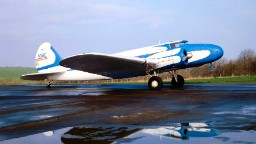
Boeing 247 – Debuting in 1933, the Boeing 247 held three crew, 10 passengers and 400 pounds of mail. It had a range of 1,198 kilometers and ceiling of 25,400 feet. The world's first truly modern airliner, it was the first to incorporate and combine retractable landing gear. It took 20 hours to fly from New York to Los Angeles, including seven stops.
Hide Caption
3 of 12

12 photos: Boeing through the ages
Boeing 314 Flying Clipper Boat – The "Jumbo" of its time, the 314 Clipper made the first scheduled trans-Atlantic flight in 1939. It held 74 passengers and cemented regular flying on long-haul routes from North America across the Pacific to Asia and across the Atlantic to Europe. Its well-appointed cabin heralded the real birth of in-flight service.
Hide Caption
4 of 12
12 photos: Boeing through the ages
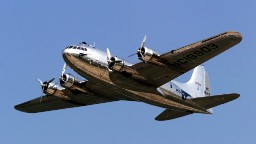
Boeing 307 Stratoliner – Based on the B-17 military bomber, Boeing's 307 Stratoliner first flew on December 31, 1938. It was the first commercial transport aircraft with a pressurized cabin, allowing it to fly above the clouds and bad weather. Howard Hughes bought one and turned it into a "flying penthouse" with a bedroom, two bathrooms and lounge.
Hide Caption
5 of 12
12 photos: Boeing through the ages
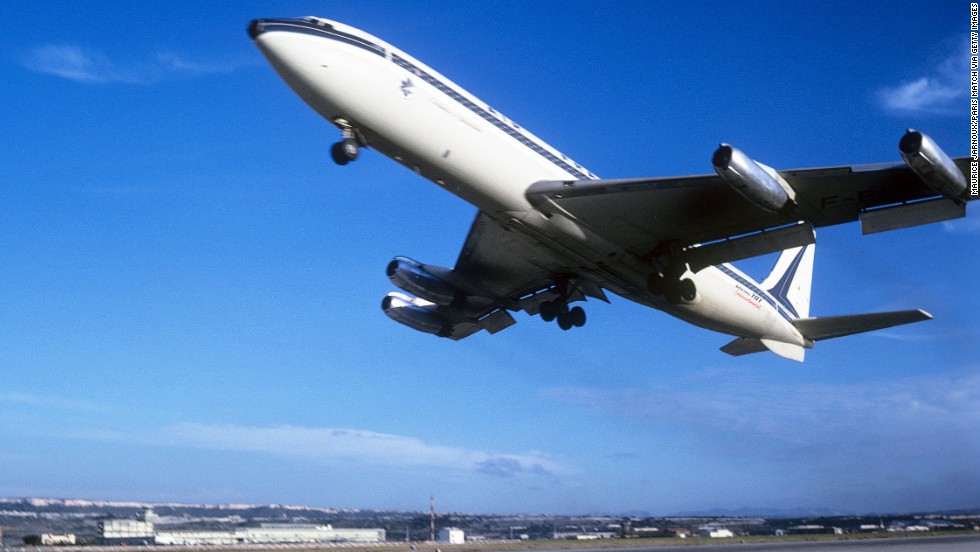
Boeing 707 – The 707 doesn't look like much now, but it started the 7-series of Boeing planes and is viewed as the jet that ushered in commercial air travel. It was the dominant passenger airplane of the 1960s.
Hide Caption
6 of 12
12 photos: Boeing through the ages
Boeing 727 – Boeing struck gold with the 727. Just 250 were planned, but demand was so high that 1,832 were built by the time production ceased in 1984. The most distinctive of Boeing's early jets, with a T-shaped tail and a trio of rear-mounted engines, the noisy 727 took its first flight in 1963. It was designed to use smaller, less developed runways, making it amenable to a host of out of the way airports.
Hide Caption
7 of 12
12 photos: Boeing through the ages
Boeing 737 – Chances are you've flown on a 737, which has been around since 1967. The best-selling jet in aviation history offered six-abreast seating, allowing more passengers per flight. The number of seats was increased by moving the engines under the wing. Flight engineers were made redundant by the 737's technology and a two-crew cockpit became standard.
Hide Caption
8 of 12
12 photos: Boeing through the ages
Boeing 777 – Upon hitting the skies in 1994, the 777 became the widest, most spacious jetliner in its class. Carriers have increasingly used the 777 as a fuel-efficient alternative to other wide-body jets, particularly for long-haul flights.
Hide Caption
9 of 12
12 photos: Boeing through the ages
Boeing 787 Dreamliner – The Dreamliner is said to have revolutionized jetliner design and brought commercial aeronautics into the 21st century. Its "plastic" fuselage makes it lighter and 20% more fuel-efficient than similar-sized aircraft, while it claims to enhance the passenger experience with bigger windows and more space.
Hide Caption
10 of 12
12 photos: Boeing through the ages
Boeing 777X – Boeing officially launched its 777X program in 2013 at the Dubai Air Show. The 9X version will have a range of over 14,075 kilometers (8,746 miles) and fit 400 passengers. Notable changes from the original 777 include a longer, composite wing and a new GE engine. Production is scheduled to begin in 2017 and first delivery is targeted for 2020.
Hide Caption
11 of 12
12 photos: Boeing through the ages
737 MAX – The Boeing 737 MAX made its debut flight on January 30, 2016. The fourth generation of this family of aircraft is designed to compete directly against the Airbus A320neo family aircraft in an ongoing battle to dominate the global narrow-body market segment.
Hide Caption
12 of 12
12 photos: Boeing through the ages
Best of Boeing – The Boeing 747 was one of the iconic commercial jets of the 20th century. Its arrival in the late 1960s came about largely because Pan Am thought bigger planes would be the answer to passenger congestion at airports.
Hide Caption
1 of 12
12 photos: Boeing through the ages
Boeing 80 – Built in 1928, the Model 80 was America's first airliner designed to transport passengers on a scheduled service. It had room for three crew, 18 passengers and 408 kilograms of cargo. The fuselage was covered in fabric. Pilots accustomed to open-air cockpits complained about the enclosed flight deck. Cost: $140,000.
Hide Caption
2 of 12
12 photos: Boeing through the ages
Boeing 247 – Debuting in 1933, the Boeing 247 held three crew, 10 passengers and 400 pounds of mail. It had a range of 1,198 kilometers and ceiling of 25,400 feet. The world's first truly modern airliner, it was the first to incorporate and combine retractable landing gear. It took 20 hours to fly from New York to Los Angeles, including seven stops.
Hide Caption
3 of 12
12 photos: Boeing through the ages
Boeing 314 Flying Clipper Boat – The "Jumbo" of its time, the 314 Clipper made the first scheduled trans-Atlantic flight in 1939. It held 74 passengers and cemented regular flying on long-haul routes from North America across the Pacific to Asia and across the Atlantic to Europe. Its well-appointed cabin heralded the real birth of in-flight service.
Hide Caption
4 of 12
12 photos: Boeing through the ages
Boeing 307 Stratoliner – Based on the B-17 military bomber, Boeing's 307 Stratoliner first flew on December 31, 1938. It was the first commercial transport aircraft with a pressurized cabin, allowing it to fly above the clouds and bad weather. Howard Hughes bought one and turned it into a "flying penthouse" with a bedroom, two bathrooms and lounge.
Hide Caption
5 of 12
12 photos: Boeing through the ages
Boeing 707 – The 707 doesn't look like much now, but it started the 7-series of Boeing planes and is viewed as the jet that ushered in commercial air travel. It was the dominant passenger airplane of the 1960s.
Hide Caption
6 of 12


Story highlights
- With the industry moving toward more efficient aircraft, the iconic Boeing 747 may be nearing the end of its production life
- As the world's first wide-body airliner, the Boeing 747 revolutionized the entire tourism industry
(CNN)It's difficult to imagine now, in the age of mass global travel, that building an airplane to carry hundreds of people at a time was once seen as a huge risk.
But as the world's first wide-body airliner, the Boeing 747 went on to change not only aviation but the entire tourism industry.
Its economic design did much to move international travelwithin reach of middle-class vacationers rather than just the privileged few.
However, the venerable Boeing 747 may be nearing the end of its production life -- its manufacturing rate is to be halved to six a year.
A shift toward newer and more efficient aircraft that can land at smaller (and so more) airports and a tendency to use former passenger planes for freight has reduced Boeing's remaining 747 order book to just 20, after building more than 1,500 since 1969.
Revolutionizing mass air travel
Boeing's decision to develop a new, giant airliner bigger than those of its competitors in the mid 1960s was a bold move.
It was a huge commercial risk that required borrowing some $2 billion from a banking consortium, the largest amount of money ever borrowed by any corporation at that time.
The gamble also involved buying a 780-acre site near Seattle to build a totally new manufacturing site, and promising to deliver its first orders in a shorter time than any normal projection to develop such a large aircraft.
But more than this, the company was throwing its resources into creating the world's largest, widest and (bar the much smaller Concorde) most technically advanced airliner, and doing so in a complex market.
Boeing's competitors were also developing slightly smaller wide-body aircraft -- defined as having two aisles or a cabin wider than 200 inches -- that launched within two years of the 747's 1969 debut.
Also, much of the world expected the future of air transport to be supersonic.
Even Boeing hedged its bets by deliberately designing the 747 to be adapted as a freighter in case supersonic passenger travel became the norm.

Compared with the competing McDonnell Douglas DC10 and Lockheed L1011 Tristar, the 747 was bigger and more expensive, carrying four instead of three engines (the most expensive components).
But the fourth engine gave the plane a significant safety advantage in that it would retain much greater propulsion power if one of the engines failed.
These engines -- the Pratt and Whitney JT9D and the similarly sized Rolls Royce RB211 -- also provided much greater power and better fuel economy than was previously available.
Two engines too many
Today, the industry has moved toward twin-engine planes such as the Boeing 777 and the Airbus A330, with three-engine planes being relatively unpopular because of the high labor costs of working on an engine bedded into the tail fin.
The four-engine 747 retained a clear place in the market because twin-engine planes must staywithin a certain distance from an airport in case of engine failure.
This allowed the 747 to achieve shorter journey times on the longest routes because it could use more direct flight paths.
However, improving engine reliability means authorities have slowly increased the distance a twin-engine airliner can fly from a runway, gradually reducing the advantage of having four engines.
And those newer, more reliable engines have also been bigger and more efficient.

NASA's Boeing 747 Shuttle Carrier Aircraft landing at Dulles International Airport near Washington.
Of course, the slowdown in 747 production doesn't mean the original jumbo jet will disappear from the skies just yet.
The latest models are much longer, bigger and operate with more modern engines and instruments than the earlier 747-100s -- no longer do the crew have to take sextant readings through the cockpit roof -- and the newer aircraft are likely to stay in service for at least another 20 years.
The size and flexibility of the design also mean the 747 provides some specialist functions.
For example, a joint U.S./German project has built a giant infrared space telescope into a 747.
The U.S. Air Force has installed a chemical laser into another as part of its Star Wars program and has successfully used it in tests to shoot down ballistic missiles.

However, the 747 has probably been improved as much as it can be.
The four-engine wide-body aircraft may not be dead yet, but the 747's nearest competitor, the Airbus A380, has also suffered from the shift to smaller and more flexible aircraft and took no new orders last year.
Boeing itself has moved on to other models, most recently the lightweight 787.
Still, the original jumbo jet will always be the aircraft that made Boeing into the global leader it is today, helping bring long-distance air travel to many who previously could never have dreamed of it.
Copyright 2016 The Conversation. Some rights reserved.


