Wednesday, March 2, 2016

Ex-Chesapeake CEO McClendon dies in car wreck


Ex-Chesapeake CEO McClendon dies in car wreck


CNBC
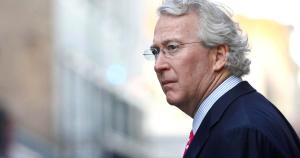
Aubrey McClendon, a founder and former chief executive of Chesapeake Energy (CHK), died in a fiery single-car crash Wednesday, a day after he was charged with conspiring to rig bids for oil and natural gas leases.
McClendon, 56, crashed into an embankment while traveling at a "high rate of speed" in Oklahoma City just after 9 a.m. local time, said Capt. Paco Balderrama of the Oklahoma City Police Department. Flames engulfed McClendon's vehicle "immediately," Balderrama said. He added that police determined McClendon was not wearing a seatbelt after earlier being unable to tell.
"He pretty much drove straight into the wall," Balderrama said.
He said police still needed to determine an exact cause of the crash, but a medical event was "possible." McClendon was expected to turn himself in at 11 a.m., Balderrama added.
McClendon — a key player in the U.S. shale boom — co-founded Chesapeake in 1989 and stepped down from the company in 2013. Chesapeake is the second-largest natural gas producer in the United States. He also founded American Energy Partners, where he had been chief executive.
McClendon, a Duke University graduate, was a part owner of the National Basketball Association's Oklahoma City Thunder. The team plays its home games at Chesapeake Energy Arena. 
"Aubrey's tremendous leadership, vision and passion for the energy industry had an impact on the community, the country and the world. We are tremendously proud of his legacy and will continue to work hard to live up to the unmatched standards he set for excellence and integrity," American Energy Partners said in a statement.
Chesapeake said in a statement that it is "deeply saddened by the news" and its "thoughts and prayers are with the McClendon family during this difficult time."
McClendon had denied the antitrust charges against him.
The alleged conspiracy took place between December 2007 and March 2012, Tuesday's federal indictment said. The companies are accused of deciding who would win certain oil and natural gas bids, then giving an interest in the leases to the other company. The Justice Department did not say which other company it believes was involved in the alleged scheme. 
"Anyone who knows me, my business record and the industry in which I have worked for 35 years, knows that I could not be guilty of violating any antitrust laws," McClendon said in a statement Tuesday.
The DOJ's antitrust division said it was "saddened" to hear about McClendon's death and offered condolences to his family.
Reactions came in from the business and energy world Wednesday. T. Boone Pickens of BP Capital Management called McClendon "a major player in leading the stunning energy renaissance in America" and "a true entrepreneur."
"No individual is without flaws, but his impact on American energy will be long lasting," Pickens said in a statement. 
Oklahoma City-based Continental Resources (CLR) said McClendon not only "transformed (the) industry, but also helped transform Oklahoma City into a world-class city."
Activist investor Carl Icahn — the largest Chesapeake shareholder — said he was "saddened" by McClendon's death.

CNBC's Jim Cramer called McClendon a "character" and a "visionary" who "made mistakes."
"He had tremendous ideas about what our country was going to do to be energy independent. He loved that," Cramer said Wednesday.
Chesapeake said Tuesday that it did not expect to face criminal prosecution or fines related to McClendon's charges. The company's stock, which was already substantially higher Wednesday, briefly added to gains after news of McClendon's death.

MY COMMENT.
This is a typical white collar fraudster and a con, who chicken out and took his life in an apparent suicide. 

Starving militants surrender to Nigeria's military

Starving militants surrender to Nigeria's military

MAIDUGURI, Nigeria -- Dozens of emaciated-looking Boko Haram members begging for food have surrendered in northeast Nigeria, the military and a civilian self-defense fighter said Wednesday.
Seventy-six people including children and women gave themselves up to soldiers last Saturday in Gwoza, about 60 miles southeast of Maiduguri, according to a senior officer.
All are being detained at military headquarters in Maiduguri, the birthplace of Boko Haram and currently the command center of the war against the Islamic extremists, according to the officer. He insisted on anonymity because he is not authorized to speak to journalists.
The detainees said many more fighters want to surrender, a self-defense civilian fighter who helped escort them to Maiduguri told The Associated Press.
Food shortages could indicate that Nigeria's military is succeeding in choking supply routes of the Islamic extremists who have taken their fight across Nigeria's borders. Some 20,000 people have died in the 6-year-old uprising. Boko Haram was declared the deadliest of all terror groups in 2014, surpassing the Islamic State of Iraq and Syria (ISIS) to which it declared allegiance last year.
Nigeria's military reported that dozens of Boko Haram fighters were surrendering in September and October last year. It promised those who give themselves up voluntarily that they will be rehabilitated through a de-radicalization program.
In the 10 months since he took office promising to halt the insurgency, President Muhammadu Buhari has replaced the leadership of the military, moved the headquarters for the fight from the distant capital, Abuja, to the heart of the northeastern insurgency and resupplied soldiers.
As the military has driven the insurgents from the towns and villages where they had set up an Islamic caliphate, Boko Haram has returned to hit-and-run tactics and suicide bombings.

Sunday, February 28, 2016

Texas man shoots armadillo, bullet ricochets back into his face

Texas man shoots armadillo, bullet ricochets back into his face

Animal's status unknown because authorities were unable to find it

Thomson Reuters Posted: Jul 31, 2015 7:09 PM ET Last Updated: Aug 01, 2015 8:42 AM ET
A Texas man was injured after he tried to shoot an armadillo and the bullet bounced off the animal's shell, striking the man in the jaw.
A Texas man was injured after he tried to shoot an armadillo and the bullet bounced off the animal's shell, striking the man in the jaw. (Silvia Izquierdo/Associated Press)
A Texas man was wounded after he fired a gun at an armadillo in his yard and the bullet ricocheted back to hit him in his face, the county sheriff said Friday.
Cass County Sheriff Larry Rowe said the man, who was not identified, went outside his home in Marietta, Texas, at around 3 a.m. local time Thursday morning. He spotted the armadillo on his property and opened fire.
"His wife was in the house. He went outside and took his .38 revolver and shot three times at the armadillo," Rowe said.
The animal's hard shell deflected at least one of three bullets, which then struck the man's jaw, he said.
The man was airlifted to a nearby hospital, where his jaw was wired shut, according to Rowe.
The status of the animal is unknown.
"We didn't find the armadillo," the sheriff said.

Melissa Harris-Perry Walks Off Her MSNBC Show After Pre-emptions

Photo
Melissa Harris-Perry said she had received no word about whether her MSNBC show had been canceled.CreditFred R. Conrad/The New York Times
In an unusually public flare-up, one of MSNBC’s television personalities clashed with the network on Friday in a dispute about airtime and editorial freedom and said she was refusing to host the show that bears her name this weekend.
The host, Melissa Harris-Perry, wrote in an email to co-workers this week that her show had effectively been taken away from her and that she felt “worthless” in the eyes of NBC News executives, who are restructuring MSNBC.
“Here is the reality: Our show was taken — without comment or discussion or notice — in the midst of an election season,” she wrote in the email, which became public on Friday. “After four years of building an audience, developing a brand and developing trust with our viewers, we were effectively and utterly silenced.”
In a phone interview, Ms. Harris-Perry confirmed she would not appear on the show this weekend. She said she had received no word about whether her show, which runs from 10 a.m. to noon on Saturdays and Sundays, had been canceled, but said she was frustrated that her time slot had faced pre-emptions for coverage of the presidential election. She said she had not appeared on the network at all “for weeks” and that she was mostly sidelined during recent election coverage in South Carolina and New Hampshire. (She was asked to return this weekend.)
In her email, Ms. Harris-Perry wrote that she was not sure if the NBC News chairman, Andrew Lack, or Phil Griffin, the MSNBC president, were involved in the way her show was handled recently, but she directed blame toward both.
“I will not be used as a tool for their purposes,” she wrote. “I am not a token, mammy or little brown bobble head. I am not owned by Lack, Griffin or MSNBC. I love our show. I want it back.”
Ms. Harris-Perry is black, and Mr. Lack and Mr. Griffin are white. In the phone interview on Friday, Ms. Harris-Perry clarified her remarks and said she did not think race played a role in her recent absence from the air.
“I don’t know if there is a personal racial component,” she said. “I don’t think anyone is doing something mean to me because I’m a black person.”
An NBC News spokesman said in a statement, “In this exciting and unpredictable presidential primary season, many of our daytime programs have been temporarily upended by breaking political coverage, including M.H.P. This reaction is really surprising, confusing and disappointing.”
For MSNBC, this is unwelcome news during a heated election. Last year, after its scandal involving Brian Williams, Mr. Lack, the former head of NBC News, was brought back to run the news division, and one of his chief missions was to fix the ailing MSNBC, which significantly trails Fox News and CNN in viewership. In the last few months, Mr. Lack has steered MSNBC away from its liberal identity and moved it toward harder news in the daytime hours. Since January, the network has had round-the-clock election coverage (including the reintroduction of Mr. Williams as co-anchor on primary nights), and notched strong ratings gains year-over-year in the mornings and afternoon.
Ms. Harris-Perry, who is also a professor at Wake Forest University, has hosted her MSNBC show since 2012. She has used the show to explore issues like social justice and racism, and diversity has been the centerpiece of the show since its start.
“I care only about substantive, meaningful and autonomous work,” she wrote in her email. “When we can do that, I will return — not a moment earlier.”
She said that last month the onscreen branding for her show was replaced by MSNBC’s slogan, “The Place for Politics.” With the election heating up, her show was pre-empted each of the last two weeks and for the most recent edition, on Super Bowl Sunday, she was told to talk mostly about the presidential race.
She still did speak about other topics, including Beyoncé’s new video for her song “Formation” and how it addressed race. But perhaps in a sign of the network’s shifting priorities, as she and her guests engaged in a lengthy discussion about the video, live video of rallies for Jeb Bush and Chris Christie in New Hampshire played in a box on the screen as well.
Ms. Harris-Perry, who is under contract, said that she was told that pre-emptions and election coverage were going to play out for the “foreseeable future.” Joy Reid will take over her time slot on Saturday, just as she has for the last couple of weeks.
Ms. Harris-Perry said not being able to talk to her viewers felt like a “betrayal.”
“It is perfectly fine, 100 percent reasonable and perfectly acceptable for MSNBC to decide they no longer want the M.H.P. show,” she said. “But they should say that. They should cancel the show; they should stand up. And maybe it would be rewarded with huge ratings, but they shouldn’t kill us by attrition and take us off the air without telling anybody, including us. That for me is what’s painful and difficult.”

How Scam Artists Trick You Into Thinking You’re Purchasing New Tires


How Scam Artists Trick You Into Thinking You’re Purchasing New Tires

Here’s one way professional scam artists are cutting corners to pocket some extra cash, and endangering the lives of unsuspecting drivers.
After watching the above video, we’re worried for whoever ended up buying those tires. The tires may look like they’re brand new and have plenty of life left in them when, in fact, they are extremely dangerous.
So, how is it done? By cutting new grooves in the worn out tires and pulling the old rubber out.
Folks, this is why you should only buy tires from reputable retailers.

Saturday, February 27, 2016

US, Nigerian navies: Ship rescue success for cooperation

US, Nigerian navies: Ship rescue success for cooperation

Naval hospital workers remove a body of a pirate that was killed during a rescue mission of the Panama-flagged Maximus vessel in Lagos, Nigeria  Monday, Feb. 22, 2016, Nigerian sailors rescued a hijacked oil tanker in a dramatic night-time rescue in which they killed one pirate, the Nigerian navy announced as it escorted the ship into Lagos harbor Monday. (AP Photo/Sunday Alamba)syndication.ap.orgNaval hospital workers remove a body of a pirate that was killed during a rescue mission of the Panama-flagged Maximus vessel in Lagos, Nigeria Monday, Feb. 22, 2016, Nigerian sailors rescued a hijacked oil tanker in a dramatic night-time rescue in which they killed one pirate, the Nigerian navy announced as it escorted the ship into Lagos harbor Monday. (AP Photo/Sunday Alamba)
LAGOS, Nigeria (AP) — It was supposed to be a U.S.-led naval training maneuver off the coast of West Africa when real-life drama intervened, with pirates taking over an oil tanker and turning the exercise into a rescue mission.
Navies from the United States, Ghana, Togo and Nigeria tracked the hijacked tanker through waters off five countries before Nigerian naval forces stormed aboard on Feb. 20 amid a shootout that killed one of the pirates.
It was the first big success in international maritime cooperation in the pirate-ridden Gulf of Guinea, the commodore in charge of U.S. operations in Africa and Europe told The Associated Press.
Capt. Heidi Agle, the commodore, had been directing a training exercise against piracy with maritime agencies of Ghana when the hijacking provided a real-life lesson, she said in a telephone interview Friday from her base in Italy.
First word came from the French Embassy, which sent information to Agle's USNS Spearhead via Ghanaian officials and U.S. diplomats of a possible pirate ship loitering off Abidjan, Ivory Coast.
There, pirates seized the Dubai-owned MT Maximus, on lease to a South Korean company and carrying 4,700 tons of diesel fuel, on Feb. 11.
The Spearhead tracked down the hijacked Maximus, identified it and then monitored its progress for two days as it sailed from Ivorian into Ghanaian waters. Then Agle handed over to Ghana's Navy, which continued to shadow the ship until it entered the waters of Togo, when that country's navy took over.
As the pirates steamed across the gulf toward the tiny island nation of Sao Tome and Principe, officials there contacted the Nigerian government for help.
The tanker had sailed nearly 800 miles (1,280 kilometers) before the Nigerians made the assault.
Dirk Steffen, maritime security director of Denmark-based Risk Intelligence, agreed the operation was "the first anti-piracy success in the region of this scale."
"Never has a West African navy carried out an opposed boarding before," he said.
Agle called it "a coordinated effort and the biggest piece in progress in the region" since the United States began training with African nations in the Gulf of Guinea in 2009.
The rescue was directed by Nigerian Rear Admiral Henry Babalola, who told the AP that it was made possible by a maritime agreement allowing Nigeria to patrol Sao Tome's waters.
"When we challenged them (the pirates), they said that they were in international waters" with the law of the sea on their side. But the agreement allowed the Nigerians to storm the ship after eight hours of attempted negotiations.
"International cooperation is the new mantra for maritime security," Babalola said. "We cannot go it alone."
Six pirates were captured and 18 crew members freed. Several pirates escaped with two crew members who remain hostages, Steffen said.
Babalola stressed the economic impact of piracy, pushing up the price of maritime insurance with costs ultimately passed on to consumers.
One-fifth of all maritime crime in the world is committed in the Gulf of Guinea, but that is only the tip of the iceberg since an estimated two-thirds of piracy acts there are never reported, according to Ocean Beyond Piracy, a private, Colorado-based organization.
The Gulf of Guinea is primed for economic growth, a major route for oil supplies shipped around the world with a mild climate that is ideal for commerce, docking and fishing.