Friday, December 11, 2015

Still on the History of Benins by Barr and Elderstatesman Ojealaro Friday


THE SOLILOQUIES OF THE ELDERSTATESMAN...
>> ECHOES OF OUR PAST <<
I LOVE OBA OVORANMWEN by 
Elderstatesman Ojealaro Friday
Today,I want to take myself away from the deplorable political and economic situation in Nigeria and reflect on the past. I mean the past of one of the most organized Independent Kingdoms that ever came out of Africa- The Benin Kingdom. My interest this morning is Benin under His Imperial Majesty( HIM) Oba Ovoranmwen Nogbaisi,the last absolute Monarch of an Independent Edo Nation.
Now,look up at the title I chose for this piece," I love Oba Ovoranmwen" Do you know what I love about him? It is his Majestic arrogance and defiance,coupled with his uncommon decisiveness. In this treatise,I intend to obviate instances where he put all these into enrapturing display.
Because of the bad influence the coming of the colonialist brought to the west Africa coast,many hitherto spineless dukedoms decided to take a go at rebellion from their sovereign states. This is the kind of scenario Oba Overanmwen inherited when he mounted the kingdom of his forefathers in the mid 19th century. Rebellions everywhere and it was the way he dealt with them all that makes this man one of the men I love most in World history. I will give three instances.
(1) ITSEKIRIS TRADING TRANSGRESSIONS:
The Itsekiris are Benin people in present day Delta state. They were part of the Benin Independent Kingdom. A Benin Prince ( Ginuwa) established their Arch-Duchy. Since they lived very close to the empire's commercial waters,they traded and were in charge of regulations of riverine commerce. But,it came to the notice of the Oba that,they are perpetrating some commercial frauds by setting prices of goods not approved by the Oba of Benin. They were summoned to the palace and the Oba sternly admonished them and warned them on pain of death not to try it again. As punishment,Oba Ovoranmwen asked them to foot the bill of re-roofing the palace which they willingly did,happy to escape with so light a sentence. Never till the whiteman sacked Benin,did Itsekiri dare misbehaved again.
(2) EKPOMA CHIEFS PROTEST.
Now,the Mini Dukedom of EKPOMA comprises unadulterated benin people. The Duchy was also established by a Benin Prince like all other Duchies. Oba Overanmwen perceived that there is unrest in EKPOMA after the death of the Last Duke. According to Ola Rotimi( In the Historical Play he wrote about the Oba), This is how Ovoranmwen reacted.
" Big towns rebel,small town also rebel. Big snails push forward,small snails also push forward. Now tell me,what is the problem in LITTLE EKPOMA".
He was told that,the courtiers have refused to crown the first son of the last onogie of Ekpoma because they feel he is too young to rule. The Oba immediately sent for the EKPOMA Chiefs and they came trembling before his presence. He asked them how can they determine the sex of a chicken still inside the egg. Shouldn't they allow the egg to hatch first? He ordered them to crown the young prince and give him a chance. They can always report back to him. After this,he feasted them and sent them back with a lot of royal gifts. And,it was not recorded "Little Ekpoma" caused " wahala" again.
AKURE/ONDO REBELLION.
The Ondo people who today,through acculturation now speaks Yoruba were Edo people properly organized under the Benin Duchy of Akure( A'Kue). Their Duke decided to test the waters and when the Oba heard this,he immediately called a War Council and this is how Ola Rotimi reported his indignation at Akure's behavior.
" I have heard that the Udezi( Deji now) of Akure has fashioned for himself two stately swords. Two stately swords to buttress his vanity. Now,go and remind him with " A KEG OF GUN POWDER" that,Akure is still part of Benin Kingdom,handed over to me by Adolor my father"
Lol..The Oba did not see Akure worth wasting more than a keg of gunpowder on.
However,as soon as the Duke of Akure heard that the Oba is very angry with him,he did not wait for the sound of that keg of gun powder. He rushed to benin and was ushered into the awesome and majestic presence of Ovoranmwen. He exonerated himself by proving that,the stately swords were made of ordinary wood. He dares not use iron. The Oba asked him to break the swords with his own hands in his presence. The Udezi with much trembling broke the swords. He was sent back to Akure with further stern warnings to be of good behavior. And,the Ondo people never rebelled again. They were excised from the Benin Empire by the British colonialists.
Now,tell me,you don't love Ovoranmwen.
Good Morning!

Thursday, December 10, 2015

Nigerian Immigrant Lives the American Dream

Nigerian Immigrant Lives the American Dream

▶0:00:00
▶
Nigerian Immigrant Turned Brooklyn Restaurateur Tells His Story

Lookman Afolayan Mashood moved to the UnitedStates from Nigeria in 1996. For several years, heworked in a restaurant as a dish washer and cook.Later, he directed day-to-day operations at the eatery.
About five years ago, he and his girlfriend, NatalieGoldberg, opened their own restaurant in Brooklyn --one of New York City’s five boroughs. The restaurantsells Nigerian food. It is called “Buka.” That is a word in the Hausa language for a simple eating place on theside of a road that sells good food.
Mr. Mashood thinks his business, called Buka NewYork, is the most popular African restaurant in the city.
“There's no food compared to Nigerian food. Anybodycan cook goat, anybody can cook beef. But when aNigerian man cook(s) beef for you, you will see thedifference. We always bring the flavor out of anythingwe cook, whether its fish, whether its beef, whether itschicken, whatever we cook -- it's very distinctive -- that colonialism has not been able to change! So, I’mvery proud to say I present Nigerian food as it should be, in New York.”
Mr. Mashood says it was not easy to operate a restaurant.
“Nobody give you money to start a restaurant -- there’s no angel fund forrestaurants, so you have to struggle very extra hard, you will never haveenough money. So if you want to have a restaurant, you need a heart -- I thinkheart is the most important thing, the conviction I’m going to have arestaurant.”
People eating at the restaurant like the choice of foods.
“So, it has okra, smoked fish, goat meat, and you eat it with pounded yam.”
“When I dine here, it’s like I’m home. And that’s the truth.”
Mr. Mashood says that when he lived in Nigeria, he was just one of manypeople around the world who wanted to live in the US.
“You cannot stop immigration -- the best of America is immigration, because it is only the bright mind(s), in all the corners of the globe that want to come toUSA. It’s only the people that want to advance, those are the people whoapply for (a) visa, and want to come here. The dream is still very available,still alive, and especially for Nigerians, because if you want to come toAmerica and work very hard, you will survive. You will gain the reward of whatyou’ve done.”
I’m Bob Doughty.
VOA’s Carolyn Weaver reported on this story from New York. ChristopherJones-Cruise adapted it for Learning English. George Grow was the editor.

Nigeria Social Media Bill Criticized

December 10, 2015 21:50 UTCListen

As It Is

Nigeria Social Media Bill Criticized

Internet activists, technology experts and rights groups have joined “to call for the withdrawal" of a bill that would punish those who criticize the government or politicians. They are using the hashtag #NoToSocialMediaBill.
Nigerians protested Tuesday at the National Assemblyagainst a bill they say would punish those who criticizeofficials and politicians on social media.
Critics say the bill attacks free speech and violates theconstitution.
But Senate leaders say critics do not understand theproposed legislation.
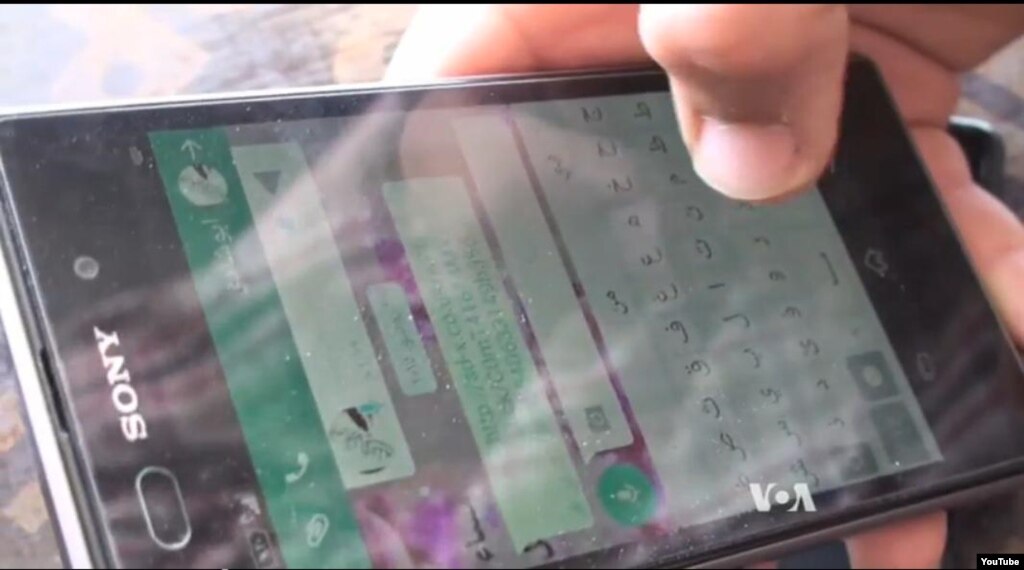
Social media and text messaging services likeWhatsapp are popular in Nigeria both forcommunication and for spreading news.
Mausi Segun is an expert on Nigeria and works forHuman Rights Watch. She said the bill was written to “stifle, and to have a chilling effect on, freedom ofspeech.”
Segun said the bill would give officials the power to fineor jail people who publish an “abusive statement”against organizations or individuals. She said shedislikes another part of the bill that would let officials jailsomeone who spreads, in the bill’s words, “falseinformation.”
People could be sentenced to two to seven years inprison and fined between $10,000 and $25,000.
Segun said Nigeria has laws that punish people forpublishing information that is wrong. She says the newbill is not necessary.
She said lawmakers should be working to deal with the Boko Haram terroristgroup, violence and corruption rather than trying to limit free speech.
AlJazeera reported that Internet activists, technology experts and rightsgroups have joined “to call for the withdrawal of (the bill).” They are using thehashtag #NoToSocialMediaBill.
Senator Aliyu Sabi is the chairman of the Senate Committee on Media andPublic Affairs. He said many Nigerians misunderstand the intent of the bill.
InformationNigeria.com reported he said the bill was written “to protect allindividuals and institutions, including journalists and social media users.” Hesaid “the senate is committed to freedom of speech and a fully inclusive andparticipatory democracy.”
Sabi said the Senate “is conscious of its responsibility to the people and will not do anything that will stifle participation and inclusion.”
AlJazeera reported the senate president and minority leader support the bill.
Japheth Omojuwa writes often on social media and on blogs. He says hedoes not believe the bill will become law. But he said “if it gets passed, it putsyou in a situation where you’re mentally, subconsciously afraid to questionthose in authority and those in government.”
He says if the bill is approved he would leave Nigeria.
A senate committee will hold hearings on the bill. Critics and supporters mayspeak at the hearings. The committee will decide if the full senate should voteon the bill.
If the senate approves it, it must also be approved by the House ofRepresentatives and then signed by the president before it can become law.
But President Muhammadu Buhari does not appear to support the bill. He is aformer military leader who suppressed free speech in the 1980s. In astatement posted on Facebook, his spokesman said the president would not support “any legislation that may be inconsistent with the constitution ofNigeria.” 
I’m Christopher Jones-Cruise.

Chris Stein in Nigeria reported on this story for VOANews.com. ChristopherJones-Cruise adapted the story for Learning English. He also used reportingby InformationNigeria.com and AlJazeera.com, and information from HumanRights Watch. Kathleen Struck was the editor.

Bad luck Zuck: China says no plans to stop blocking foreign web sites

Bad luck Zuck: China says no plans to stop blocking foreign web sites

What will it take for Facebook to come to China?
What will it take for Facebook to come to China? 01:51

Story highlights

  • China's Internet czar says no plans to stop blocking foreign websites
  • Lu Wei says China regulates but doesn't censor the Internet
  • Activists say China has stepped up its war on the open web in recent months
Beijing (CNN)Facebook founder Mark Zuckerberg has been courting China assiduously -- learning Mandarin, welcoming officials to Facebook's offices and asking President Xi Jinping to choose a name for his then unborn child.
But, so far, there's little sign his charm offensive is paying off.
Lu Wei, China's Internet czar, says the country has no plans to stop blocking foreign websites, which includes popular social media sites such Facebook, Twitter and Instagram, as well as some news websites.
"I can't change you, but I have the right to choose my friends," Lu said at a rare news conference Wednesday.
Zuckerberg's surprise has crowd gasping
Zuckerberg's surprise has crowd gasping 01:04
"I indeed have to choose. We don't welcome those who come to China to make money while smearing China."
    "It's like a family who doesn't welcome unfriendly people into their house as guests," he continued.
    Lu denied that the Chinese Internet was becoming a cut-off "Intranet" -- a common charge of critics who say that the country has dramatically ramped up its war on the open web through a vast censorship apparatus known as the "Great Firewall of China."
    Activists say, that in the past year, regulators have shut down tools that allow people to access blocked content and threatened their developers, both in and out of the country.

    No censorship?

    Lu said China didn't censor online content, but like most countries, regulated it.
    "If we really censor the Internet, how come our Internet user population and their reliance on the Internet keep growing?
    "Let me tell you, China has four million websites, nearly 700 million Internet users, 1.2 billion mobile phone users as well as 600 million WeChat and Weibo users. Every day they post 30 billion messages. It's simply impossible for any country or organization to censor 30 billion messages."
    But he added: "Not censoring doesn't mean there is no bottom line: If you touch that line and violate the law, you will be held responsible."
    China's homegrown tech industry has thrived -- in part through creating heavily regulated Chinese versions of popular blocked services that many users find are as good if not better than their inspiration.
    Instead of Google, Chinese users have Baidu; instead of Twitter, they have Weibo; and instead of Facebook, there's WeChat.
    However, Lu, who was among the officials that visited Facebook's campus last year, didn't shut the door completely on Zuckerberg and other blocked tech companies hoping to do more business in China.
    "We are open to all Internet companies around the world. As long as you don't harm China's national interests or Chinese consumers' interest, we welcome you and your growth in China."